 11
11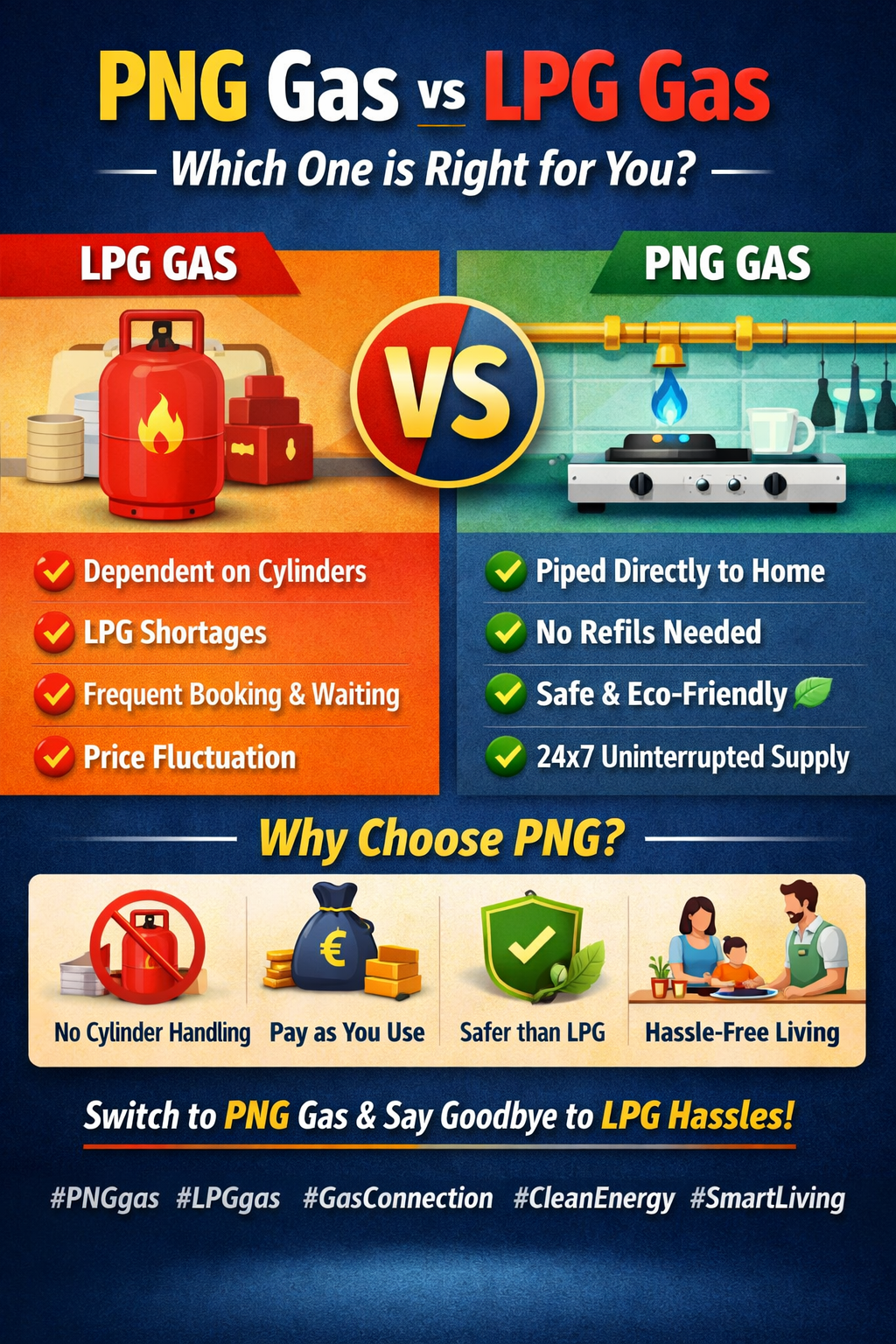
In today’s fast-moving world, convenience and reliability play a major role in our daily decisions—especially when it comes to choosing the right cooking fuel like LPG gas or PNG gas. For years, LPG gas (Liquefied Petroleum Gas) cylinders have been the standard choice for households. However, with the rise of modern infrastructure, PNG gas (Piped Natural Gas) is quickly becoming a preferred alternative. If you are still confused between PNG vs LPG, this guide will help you make the right decision.
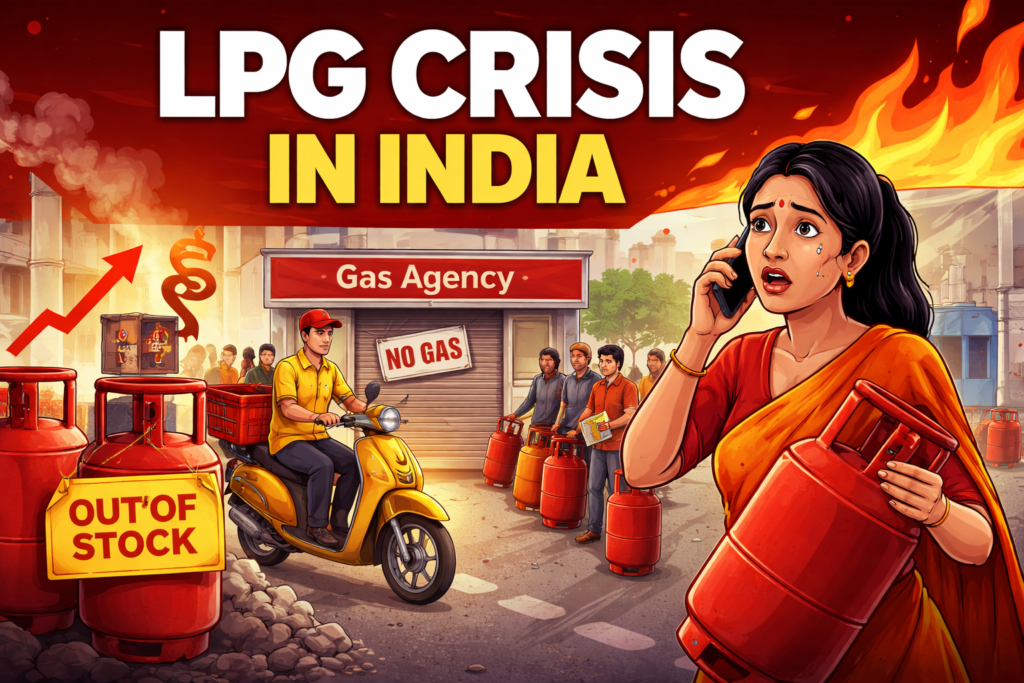
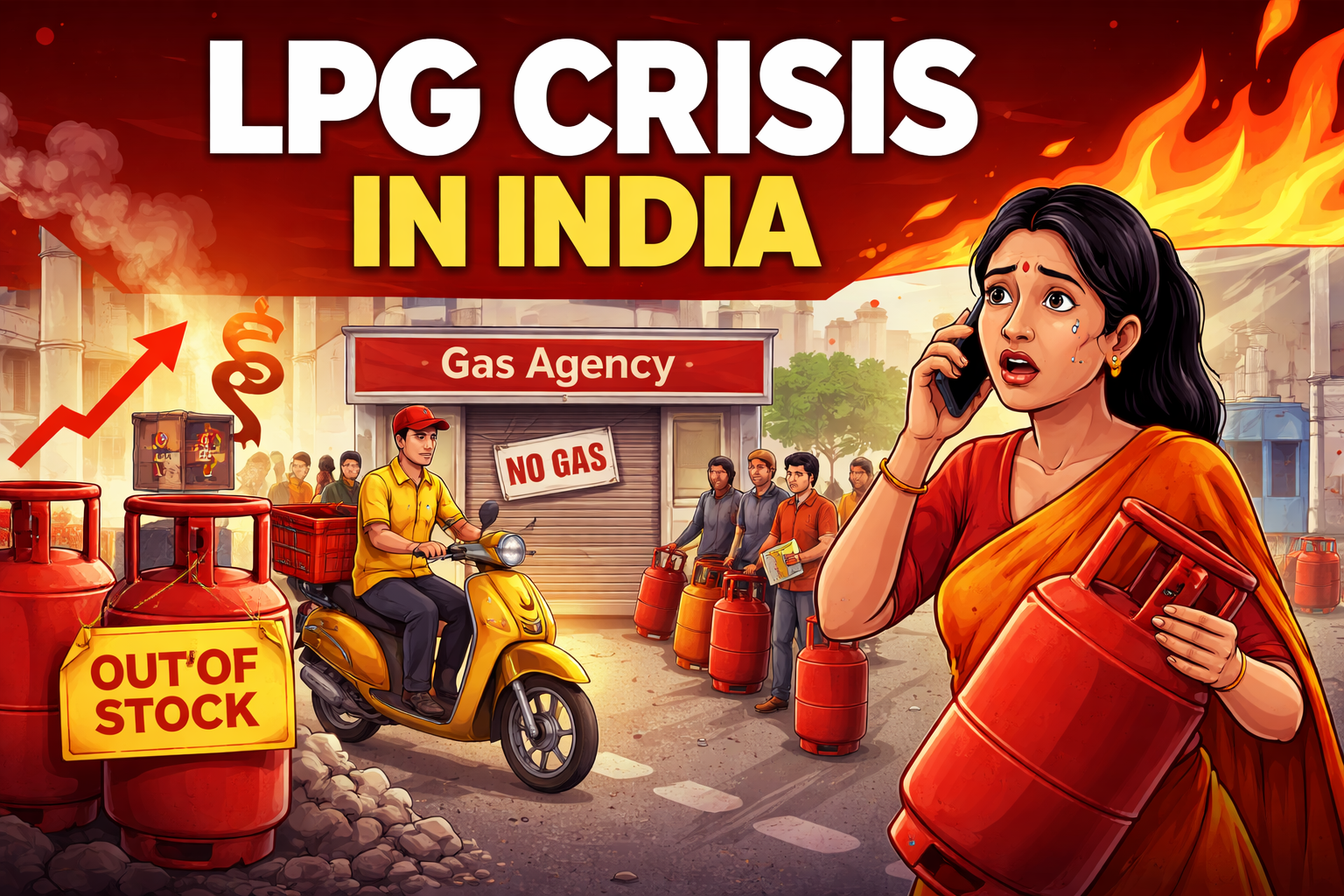
Still dealing with LPG gas cylinders and unexpected LPG shortages? 🤔 Managing cylinder bookings, waiting for deliveries, and handling replacements can be time-consuming and inconvenient. This is where PNG gas steps in as a smarter and more efficient solution.
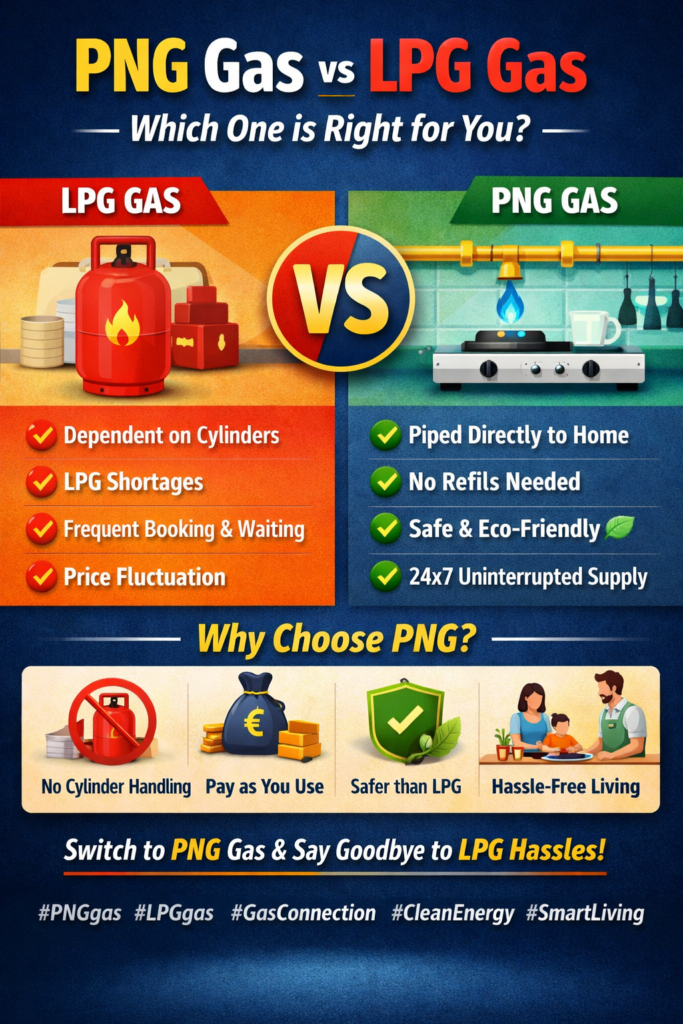
👉 Why LPG Can Be a Hassle:
While LPG has been widely used, it comes with several limitations that affect everyday convenience:
• It is completely dependent on cylinder availability
• Users often face delays due to booking and delivery processes
• Unexpected LPG shortages can disrupt daily cooking routines
• Prices fluctuate frequently, making monthly budgeting unpredictable
• Handling and storing cylinders can sometimes be inconvenient and risky
👉 Why PNG Gas is a Better Choice:
PNG gas offers a modern solution designed to simplify your lifestyle and eliminate these common issues:
• It is supplied directly to your home through a piped gas connection 🚰
• There is no need for refills, bookings, or waiting 🙌
• PNG is considered safer, as it disperses quickly in case of leakage
• It provides a 24×7 uninterrupted gas supply
• It is more environmentally friendly compared to traditional fuels 🌱
💡 Key Benefits of a PNG Connection:
Switching to PNG brings multiple practical advantages that improve your daily life:
✔ No cylinder handling or storage required
✔ Pay only for what you use with a transparent billing system
✔ Saves time and reduces daily hassle
✔ Ensures a continuous and reliable gas supply
✔ A modern and future-ready alternative for urban homes
⚖ PNG vs LPG – A Clear Comparison:
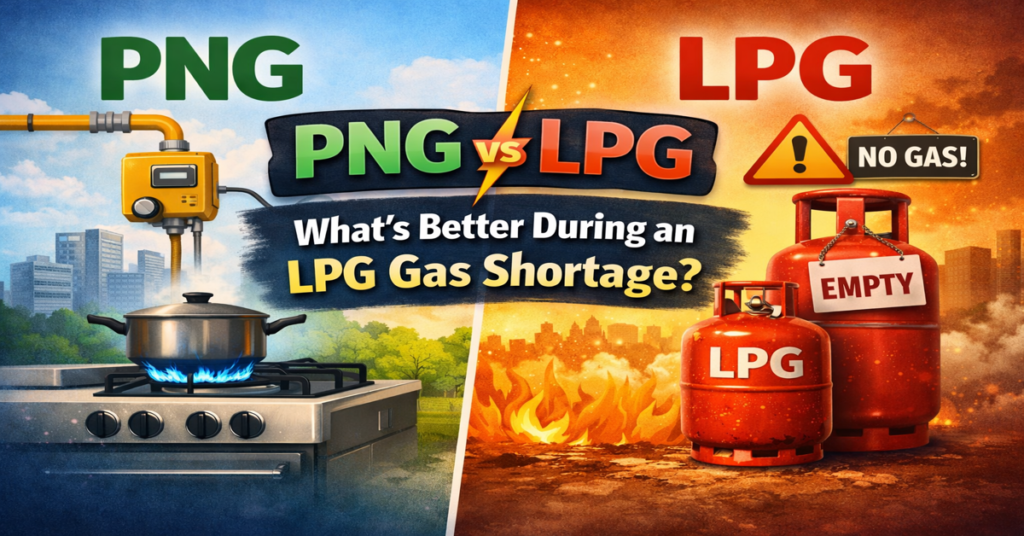
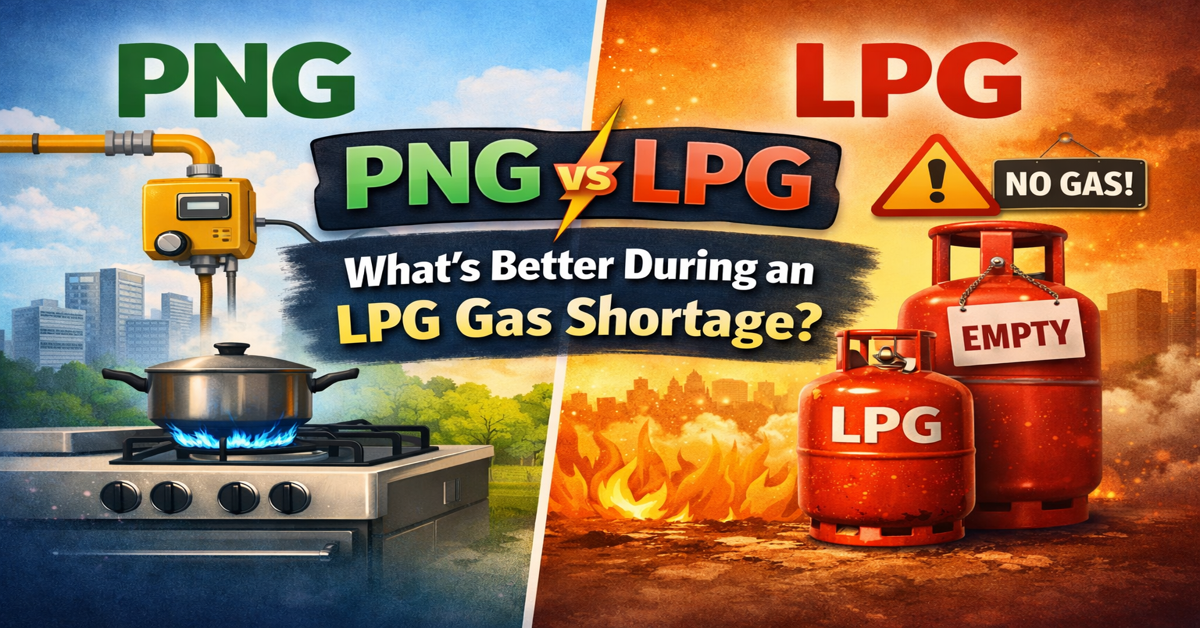
When comparing PNG vs LPG, the differences become very clear. LPG relies heavily on physical delivery systems, which can lead to delays and shortages. On the other hand, PNG provides a continuous supply through pipelines, ensuring that you never run out of gas.
In terms of safety, PNG has an advantage because it is lighter than air and disperses quickly, reducing the risk of accidents. LPG, being stored in cylinders, requires careful handling and storage.
From a convenience perspective, PNG is far superior. It eliminates the need for booking cylinders, waiting for deliveries, and managing replacements. Additionally, its pay-as-you-use model offers better control over expenses.
🌱 Environmental Impact Matters:
Another important factor to consider is environmental impact. PNG is a cleaner fuel with lower carbon emissions compared to LPG. As more people move towards sustainable living, switching to PNG becomes a responsible and eco-friendly choice.
In conclusion, choosing between LPG gas and PNG gas ultimately depends on your lifestyle, location, and daily needs. While LPG gas has been a trusted fuel for decades, its dependency on cylinders, refills, and vulnerability to LPG shortage can make it less convenient in today’s fast-paced life. On the other hand, PNG gas offers a modern, hassle-free solution with uninterrupted supply, enhanced safety, and ease of use through a direct pipeline connection.
As more urban areas continue to adopt piped gas infrastructure, the shift from LPG to PNG is becoming increasingly common. A PNG connection not only saves time and effort but also ensures you never have to worry about running out of fuel at the wrong moment. For households looking for reliability and long-term convenience, PNG gas clearly stands out as a smart and future-ready choice.
Before making a decision, consider availability in your area and your specific usage needs. Whether you choose LPG gas or PNG gas, the goal remains the same—safe, efficient, and reliable cooking for your home.