
Introduction to E-commerce Marketing
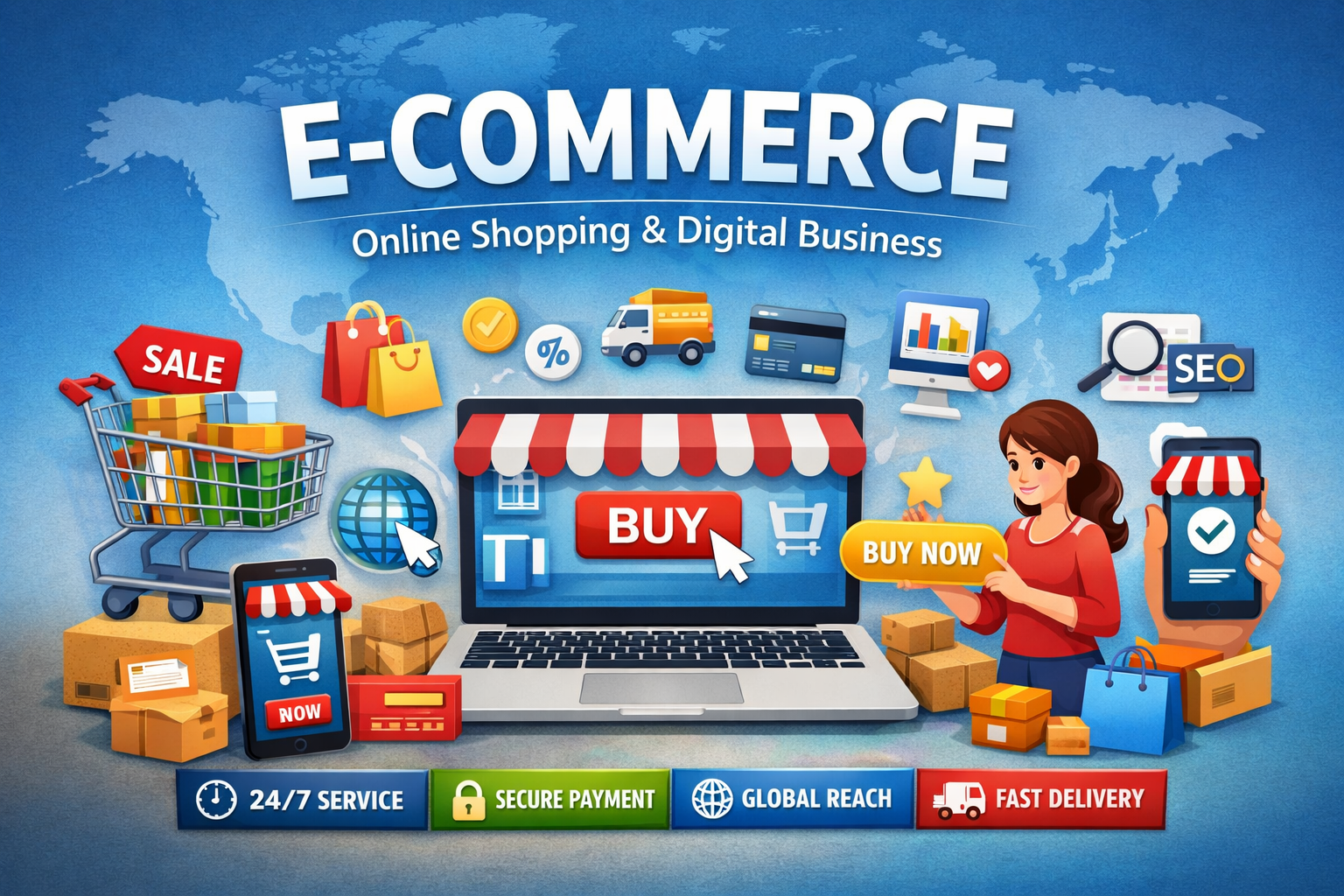
E-commerce marketing refers to the strategies and techniques used to promote an online store and attract customers to buy products online. It includes digital marketing methods such as search engine optimization (SEO), social media marketing, email marketing, and paid advertising.
In today’s competitive digital world, online marketing plays a crucial role in increasing website traffic, building brand awareness, and boosting online sales.
What is E-commerce Marketing?
E-commerce marketing is the process of promoting products or services through digital channels to increase sales in an online store. Businesses use different online platforms to reach their target audience and encourage them to purchase products.
Many online businesses use platforms like Shopify, WooCommerce, and marketplaces such as Amazon to sell products and apply marketing strategies to grow their business.
Importance of E-commerce Marketing
E-commerce online shopping helps businesses achieve several important goals:
- Increase website traffic
- Improve brand visibility
- Generate more leads and customers
- Build trust with customers
- Boost online sales and revenue
Without effective marketing strategies, even a well-designed online store may struggle to attract customers.
Top E-commerce Marketing Strategies
1. Search Engine Optimization (SEO)
SEO helps your online store appear in search engine results when customers search for products online. Optimizing product pages, blog content, and website structure improves search engine rankings and drives organic traffic.
2. Social Media Marketing
Social media platforms allow businesses to promote their products and connect with customers. Popular platforms include:
Businesses can share product posts, reels, and advertisements to attract potential buyers.
3. Email Marketing
Email marketing is one of the most effective ways to communicate with customers. Businesses send newsletters, promotional offers, and product updates directly to customer inboxes.
4. Influencer Marketing
Collaborating with influencers helps promote products to a wider audience. Influencers recommend products to their followers, which increases trust and sales.
5. Paid Advertising (PPC)
Paid ads help businesses reach customers quickly. Platforms like Google Ads and social media ads allow businesses to target specific audiences and increase conversions.
Key Elements of a Successful E-commerce Marketing Strategy
To succeed in e-commerce promotion, businesses should focus on:
- High-quality product images
- Clear product descriptions
- Customer reviews and ratings
- Mobile-friendly website design
- Fast website loading speed
- Secure payment options
These elements improve the overall shopping experience for customers.
Benefits of E-commerce Marketing
1. Wider Audience Reach
Online marketing allows businesses to reach customers worldwide.
2. Cost-Effective Promotion
Digital marketing strategies are often cheaper than traditional marketing methods.
3. Better Customer Engagement
Businesses can interact with customers through social media, emails, and live chat.
4. Higher Sales Opportunities
Effective marketing campaigns increase conversions and online sales.
Future of E-commerce Marketing
The future of e-commerce marketing will be shaped by advanced technologies such as artificial intelligence, personalized marketing, voice search, and mobile shopping. Businesses that adapt to these trends will stay ahead in the competitive digital marketplace.
Conclusion
E-commerce marketing is essential for the success of any online business. By using strategies such as SEO, social media marketing, email marketing, and paid advertising, businesses can attract more customers and grow their online store. With the right marketing approach, e-commerce businesses can achieve long-term success and higher profits.
Read also: iQOO 15R Price in India, Specifications & Everything You Need to Know